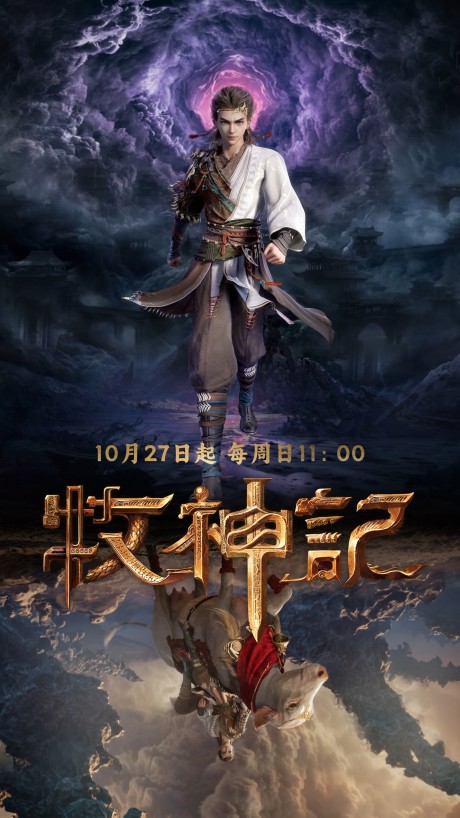
The Translation Problem
The English word "villain" carries baggage. It comes from medieval Latin via Norman French, originally meaning "farm laborer" — someone bound to a villa, the lowest class of the agricultural hierarchy. Over centuries it drifted into its modern meaning: a morally evil person, the antagonist of a story, the one the hero must defeat. When a modern English speaker hears "become a villain," they hear "become the bad guy." They picture Darth Vader. They picture Walter White's transformation. They picture someone choosing evil.
The Chinese word being translated here is not doing that work. The closest term in the original text — and the choice varies depending on the chapter and the elder speaking — operates in a moral space that English fantasy has almost no equivalent for. It is closer to "wild man," "outlaw," "outside-the-orthodoxy," "person who refuses to bow to the existing order." It includes moral darkness as a possibility, but it does not require it. A villain in this sense is someone who exists outside the legitimate hierarchy of heaven and earth, by choice, for reasons that may be entirely righteous.
To make this concrete: in Western fantasy, Robin Hood is a hero who breaks the law. In Chinese cultivation fiction, Robin Hood is a villain. Same actions, same motivation, but the framing is different. Chinese fiction does not pretend that breaking the rules of the cosmic order is neutral. It calls it what the rules call it — villainy — and then asks the harder question: what if the rules are wrong?
That is the question Blind is asking when he tells Qin Mu to become a villain. Not "be evil." Not "do harm." But "do not bow to the order of the sky that abandoned us." The full line — "become a villain undulating in the spring breeze" — adds a layer of grace to it. Spring breeze is not the imagery of menace. It is the imagery of natural force, of seasonal inevitability, of something that moves through the world without asking permission. Blind is not telling the child to become a monster. He is telling the child to become a force of nature that does not answer to the heavens.
The translation that works better: Read "become a villain" as "become an outlaw against heaven." Not the villain of a story. The villain of their story — the story heaven tells about who is allowed to exist, who is allowed to rise, and who is allowed to challenge the gods. In that story, the protagonist is always a villain. The book is asking the child to take the role on purpose.
Why the Elders Are Saying This in the First Place
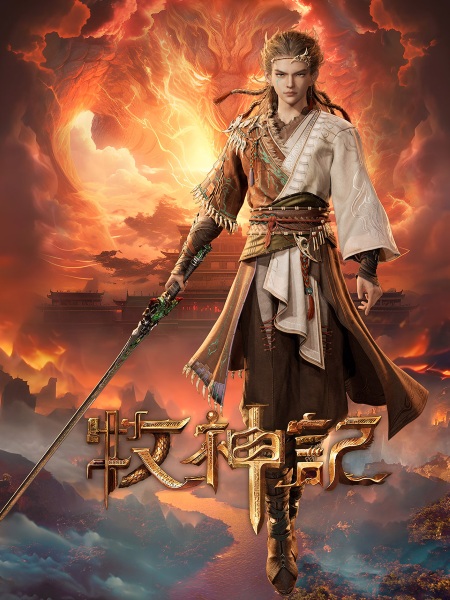
The instruction does not appear in a vacuum. It comes from a man who knows exactly what the heavens have done to him and to everyone he loves. The nine elders of Disabled Elderly Village are not retired sages from some peaceful era. They are survivors of a fallen heavenly dynasty — the Kai Huang Heavenly Court — whose civilization was destroyed by the current divine order and whose bodies bear the literal scars of that destruction. The blind elder is blind because the heavens took his eyes. The crippled elder is crippled because the heavens took his legs. The mute elder cannot speak because the heavens took his tongue. The deaf elder cannot hear because the heavens took his ears.
They are not crippled in the sense of being weak. Several of them are former Sovereigns, Emperors, and Sect Masters of the previous era. They are crippled in the sense of being permanently maimed by gods who decided their civilization had to end. And they have been waiting, for thousands of years, in a sealed wasteland called Great Ruins, for someone to carry the counterattack forward.
When Blind tells Qin Mu to become a villain, he is not making a casual philosophical comment. He is handing a child the only weapon that can work against a corrupt divine order: the willingness to be called a villain by the gods who define the word. Because the moment Qin Mu agrees to play by their rules — the moment he tries to climb the divine ladder as a good and righteous cultivator — he is on their playing field, and they will crush him. The only way to win is to refuse the framing entirely. Not "I will be a hero the gods recognize." But "I will be whatever the gods refuse to recognize, and I will be it well enough that they cannot ignore me."
That is the structural meaning of the line. The blind man is telling the boy that the system is rigged, and the only honest response is to declare yourself outside of it before the system declares you inside and then breaks you.
The Tradition Behind the Line
The "righteous villain" archetype is older than Tales of Herding Gods by about a thousand years. The most famous example is Water Margin (Shuihu Zhuan), one of the four great classical Chinese novels, in which 108 outlaws gather at Liangshan Marsh to fight a corrupt imperial government. They are bandits, in the strict legal sense. They kill, they steal, they raid. They are also the moral center of the book. The corruption of the government is so total that the only way to be righteous is to leave the legitimate order and become an outlaw — a villain — against it.
The same pattern shows up in Journey to the West, where Sun Wukong rebels against the Jade Emperor's heaven and is punished as a villain before being reframed as a divine guardian. It shows up in Investiture of the Gods, where the question of which side is righteous turns repeatedly on which side the corrupt heavens are backing. It shows up in nearly every major Chinese fantasy tradition for the last six centuries. The hero who is called a villain by a corrupt cosmic order is one of the foundational figures of Chinese narrative imagination.
What Tales of Herding Gods does that is genuinely new is take this archetype and run it forward for 1,400 chapters with a protagonist who never stops being a villain. Qin Mu does not redeem the gods. He does not earn his way into heaven. He does not become accepted by the order he was raised to defy. He stays an outlaw for the entire length of the story — saving people, building institutions, raising armies, reforming corrupt systems, and refusing at every turn to apologize for being outside the lineage the gods would have approved. The book takes the classical archetype and refuses to soften it. The villain stays a villain. The villain wins anyway.
The Western parallel that almost works: Think of John Wick. He is not a hero in the moral sense. He is a force of consequence operating outside the legitimate order — the High Table, in his case — and the films are entirely on his side because the High Table is corrupt. Now imagine John Wick was the protagonist of a 1,400-chapter epic where he eventually became a god, and the High Table was literally Heaven. That is roughly the shape of Tales of Herding Gods. The villain is the protagonist because the villain is the only one telling the truth.
Why This Makes Qin Mu Different From Every Other Cultivation Protagonist
Cultivation fiction is a saturated genre. Most cultivation protagonists follow the same arc: weak farm boy or insulted young master finds a magical inheritance, rises through ranks of power, defeats stronger and stronger enemies, and ascends to immortality. The genre has produced thousands of these stories. Many are good. Many more are formulaic. The reason Tales of Herding Gods stands out is not that it does the standard arc better. It is that it refuses the standard arc entirely.
Qin Mu has no spirit body. He has no divine talent. He has no reincarnation memories. He has no chosen-one prophecy. He has no magical inheritance from a heavenly senior. He is, by the explicit standards of his world, the worst kind of cultivator the system can produce — and the elders raise him by deception, telling him his body is special when it is not, telling him his lineage is exalted when it is not, telling him the rules of cultivation are simpler than they are. They lie to him because the truth would have killed his motivation. They build his identity out of necessary fictions, and then they hand him a single instruction that is true: become a villain.
The result is a protagonist whose every act of growth is an act of fraud against the system that defined him as worthless. He is not climbing the divine ladder. He is climbing a counterfeit ladder he built himself, smuggled past the gods, painted to look like the real thing. By the time the gods notice what he has done, he is already too high to take down. That is what "become a villain undulating in the spring breeze" turns into over 1,400 chapters: a man who built his own godhood out of nothing the heavens would have allowed.
One review site put it well: Qin Mu's path is "the rise of a reformer willing to become a villain." That is the most accurate single sentence anyone has written about the series. He is not refusing to do good. He is refusing to be the kind of good the corrupt heavens reward. The two are not the same. The entire moral architecture of the show depends on the reader being able to feel the difference.
What Western Viewers Tend to Miss
The English-language donghua audience watching Tales of Herding Gods on Bilibili and Muse Asia is, for the most part, an audience trained on Japanese anime. The dominant moral framework in mainstream anime is a Christian-inflected one: good and evil are categories, the hero embodies good, the villain embodies evil, and the story is about the hero defeating the villain. Even subversive anime — even Re:Zero, even Attack on Titan — operate inside a moral grammar where the distinction between hero and villain is fundamentally legible.
Tales of Herding Gods does not work like this. The moral grammar is Confucian and Daoist by inheritance, with substantial Buddhist seasoning. The fundamental question is not "who is good and who is evil" but "who is in harmony with the way of heaven, and who is opposing it" — except that in this story, the way of heaven has been corrupted, and the people opposing it are the ones acting righteously. The categories that map cleanly in Japanese anime get scrambled the moment you apply them here. Heroes look like villains because the heavens call them villains. Villains look like heroes because the heavens have endorsed them. The story rewards the viewer who can hold the distinction between "what the gods say is good" and "what is actually good."
This is why the early episodes of the donghua confuse a lot of Western viewers. The tone is not the tone of a hero's journey. Qin Mu does heroic things, but he does them with a kind of dry self-awareness that reads as morally ambiguous if you are watching for a clear good-evil signal. He saves people, but he does not posture as a savior. He kills enemies, but he does not posture as righteous. The show refuses to give the viewer the comfortable signal that the protagonist is the good guy, because in the moral universe of the story, the question of who the good guys are is the question the story is actually asking. The elders raised Qin Mu to be a villain because the villains are the only ones telling the truth.
If you want a guide to watching: Stop looking for the moral signposts. Watch what people do, watch who they protect, watch who they refuse to bow to. The show will not tell you who the good guys are. It will show you. The reward for paying attention is that by the time the first major reveal lands — and Tales of Herding Gods has many — you will already have understood it in your bones.
What "Become a Villain" Actually Looks Like Over 1,400 Chapters
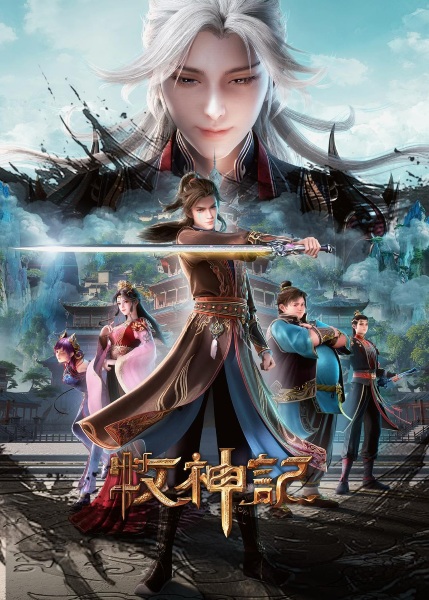
The instruction is not a one-time line. It is the through-line of the entire novel. Over the course of the story, Qin Mu accumulates a series of titles that no orthodox cultivator would want: Cult Master of the Sky Demon Cult, Overlord Body, Eternal Immortal Great Wizard, Heir to a Heavenly Court that the gods erased from history. Every title is a step further outside the order he was supposed to climb inside. Every title is a deliberate provocation. And every title turns out to be load-bearing — necessary for the next stage of the reform he is trying to carry out.
He becomes a "cult master" because the orthodox sects have refused to teach the people he wants to teach. He builds his own sect, calls it the Sky Demon Cult on purpose, and uses the demonization as cover for the actual project: educating commoners in cultivation techniques the orthodox sects keep restricted to their own members. The cult is not evil. The orthodox sects calling it evil are the corruption the story is exposing.
He fights heavenly soldiers and divine envoys because the heavens keep sending them to crush the reforms he is building. The heavens lose those fights repeatedly, not because Qin Mu is stronger than they are — for most of the story he is not — but because he has the moral leverage of being right. The system the heavens are defending is indefensible. The system Qin Mu is building, even when it is rough, even when it is incomplete, even when his methods involve deception and cruelty, is the system the people actually need. The "villain" is doing the work the "heroes" of the heavenly order are refusing to do.
By the time the story reaches its later volumes — and the donghua is still in the very early arcs — the word "villain" has been so thoroughly redefined that it functions almost as a badge of honor. To be called a villain by the heavens is to be confirmed as a force the heavens cannot domesticate. It is what success looks like in a story whose central thesis is that the divine order needs to be replaced rather than served.
Why This Premise Could Only Come From Chinese Fiction
The "corrupt heavens require a villain protagonist" premise is not impossible in other fantasy traditions, but it is very rare. Western fantasy tends to handle corrupt-divinity stories by making the divinity itself the antagonist — see Pullman's His Dark Materials, or the broader strain of Gnostic-inflected modern fantasy. Japanese fantasy tends to handle it through nihilism (Berserk) or psychological isolation (Re:Zero) rather than through the deliberate adoption of the "villain" label as a moral act. The specific move Tales of Herding Gods makes — naming the protagonist a villain on the first page and then spending 1,400 chapters proving the heavens deserve the label more — is a move that requires the particular intellectual inheritance of Chinese narrative tradition.
That inheritance includes Confucian theories of legitimacy, in which a ruler who loses the Mandate of Heaven is no longer rightfully a ruler regardless of their formal position. It includes Daoist suspicion of formalized cosmic order, in which the moment a way becomes the "official" way it has already stopped being the actual way. It includes Buddhist analyses of attachment and identity, in which categories like "villain" and "hero" are themselves attachments that the awakened reader is supposed to see through. And it includes the long classical tradition of literati who wrote bitterly about being labeled traitors by the dynasties that exiled them — a literary tradition in which being called a villain by the corrupt is the first step toward being remembered as righteous by history.
Zhai Zhu, the author, did not invent any of this. What he did was take the entire tradition and channel it into a single line spoken by a blind elder to a small child on the threshold of an adventure: become a villain undulating in the spring breeze. The line carries the weight of ten centuries of Chinese moral literature. When English readers hear it as a horror premise, they are not wrong about what the words say. They are missing the tradition that gives the words their meaning.
Where to Watch & Read Tales of Herding Gods
The donghua adaptation began in October 2024 and has already accumulated over 1.1 billion views in China, placing it among the most-watched donghua of recent years. The English-speaking audience is still discovering it. If the philosophical depth of the "become a villain" premise interests you, the novel is where the full weight of the idea lives — the donghua is currently covering only the earliest arcs of a story that runs for over 1,800 chapters.
📺 Watch the Donghua
Muse Asia YouTube — Official Bilibili international channel. Free, legal, with English subtitles. Weekly episode releases.
Watch on Muse Asia YouTube →WeTV International — Official Tencent streaming platform with English subtitles in select regions.
Watch on WeTV →⚠️ Tales of Herding Gods is not currently available on Crunchyroll.
📖 Read the Original Novel
The novel by Zhai Zhu spans over 1,800 chapters and is the most complete version of the story. The "become a villain" philosophy unfolds across thousands of pages, with multiple major arcs the donghua will not reach for years. The official English translation is available on Webnovel.
Read on Webnovel →Affiliate link — small commission may apply at no extra cost to you.
🌍 Not in Your Region?
Tales of Herding Gods has limited international distribution outside of Muse Asia and WeTV. If neither is available in your region:
- Request it on Crunchyroll. Use their content suggestion form. The more requests, the more likely they license it.
- Follow Bilibili's international expansion. Bilibili is gradually adding new regions through Muse Asia partnerships.
Legal note: ChineseAnimeTop does not recommend or link to unofficial streaming sources. Please support the original creators through legal platforms.
The Most Subversive Line in Modern Donghua
"Become a villain undulating in the spring breeze" is the kind of line that gets quoted, screenshotted, and tattooed by Chinese readers who have lived inside the novel for a thousand chapters. It is the line that sums up what the entire story is doing. It is also the line that English-speaking viewers most reliably misread, because the translation strips away the centuries of tradition that give the word "villain" its specific weight inside Chinese cultivation fiction.
Once you read the line correctly, the entire show clicks into focus. Qin Mu is not a hero who happens to do morally complicated things. He is a deliberately constructed counter-hero, raised from infancy by survivors of a fallen heavenly dynasty to refuse the divine order on principle. Every act of growth in the story is an act of rebellion. Every relationship he forms is a recruitment into the rebellion. Every title he acquires is another way of saying the same thing: the heavens are wrong, and I am building the alternative.
The donghua is currently in its earliest arcs. The full weight of the "villain" instruction will not land for years of broadcast. But the line is there from the first night Qin Mu leaves home, and once you can hear it in its full Chinese register, every subsequent scene of the show takes on the additional weight of being part of an answer to a question Western fantasy almost never asks out loud. The corrupt gods need to be opposed. The opposition will be called villainy. The villain knows this. The villain accepts the label. The villain proceeds.
And the spring breeze — soft, persistent, indifferent to the permission of any higher authority — undulates through the wasteland the gods have abandoned, carrying a single boy toward a future the gods will not be able to stop.
See you in Da Xu. Don't stay out after dark. — Aion